

How Do I Know If I Need a Root Canal or a Filling?
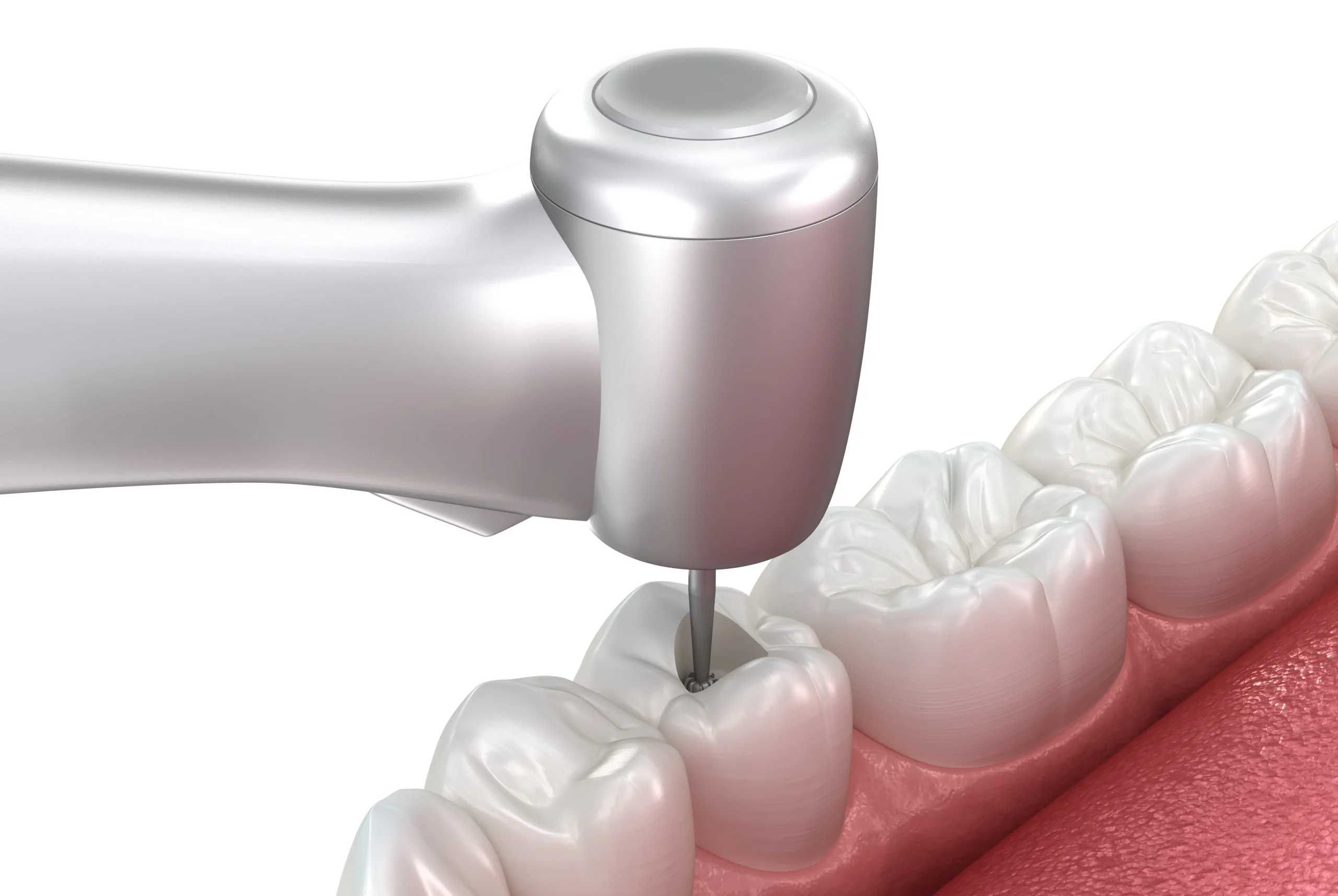
A toothache can be unsettling. One moment it’s a mild twinge, the next it’s keeping you awake at night. When pain strikes, many patients are left wondering whether they need a simple filling or whether this is heading towards a root canal?
While both treatments are designed to save your tooth, they’re used for very different levels of damage. Understanding the signs can help you act early, avoid unnecessary pain and protect your smile.
Why It Matters to Treat Tooth Damage Early
Tooth decay doesn’t stay still, and what starts as a small cavity can quietly work its way deeper into the tooth. The earlier the problem is treated, the simpler the solution tends to be. A filling repairs minor damage and restores strength but a root canal becomes necessary when infection reaches the tooth’s nerve. Knowing the difference can mean the difference between a quick visit and more complex treatment.
When a Filling Is Usually Enough
Fillings are one of the most common dental treatments and are used when decay or damage is limited to the outer layers of the tooth.
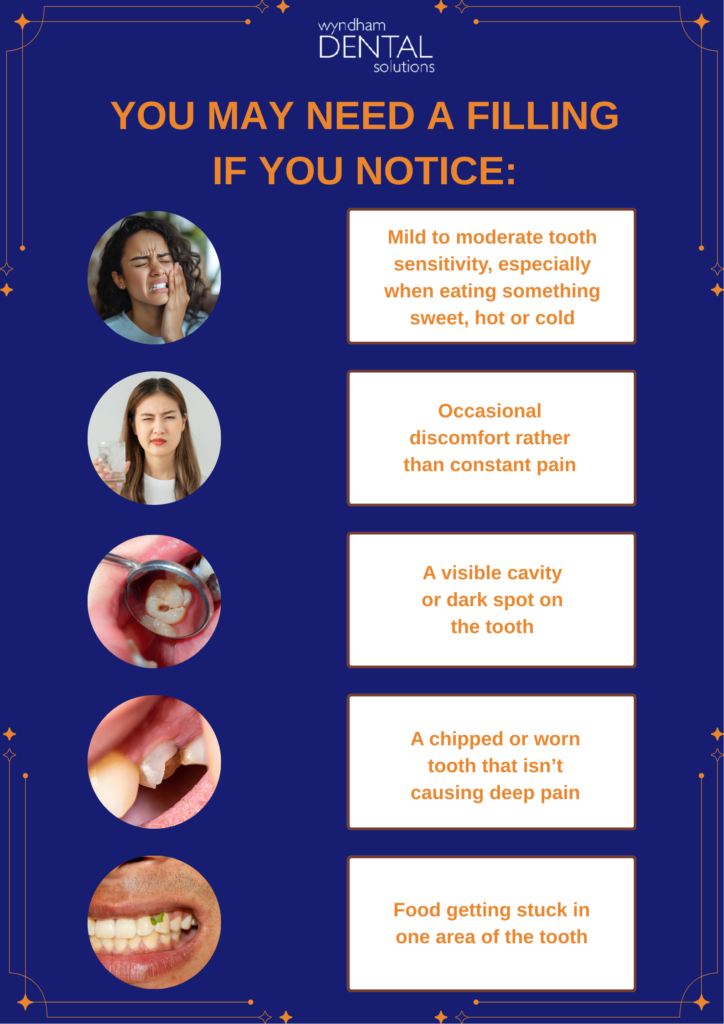
In these cases, the decay has typically affected the enamel or dentine but hasn’t reached the pulp where the nerves and blood vessels live. Removing the damaged area and placing a filling restores the tooth and prevents further decay.
Fillings are generally quick, effective, and minimally invasive when done early.
Signs You May Need a Root Canal
A root canal is recommended when infection or inflammation has reached the pulp of the tooth. At this stage, a filling alone won’t solve the problem.
Common signs that point towards a root canal include:
- Persistent or severe tooth pain that doesn’t go away
- Pain that worsens when biting or chewing
- Lingering sensitivity to heat, even after the source is removed
- Swelling or tenderness in the gums near the tooth
- A small pimple-like bump on the gums
- Darkening or discolouration of the tooth
These symptoms suggest the nerve inside the tooth is infected or dying. Without treatment, the infection can spread, leading to abscesses, bone loss, and more serious complications.
The Key Difference Between a Filling and a Root Canal
The main difference comes down to the extent of the damage.
- A filling treats damage on the outside layers of the tooth.
- A root canal treats infection inside the tooth.
If decay hasn’t reached the nerve, a filling can usually fix the problem. Once the nerve is affected, removing the infected pulp and sealing the tooth is the only way to save it.
X-rays and clinical exams are essential here. Symptoms alone don’t always tell the full story, which is why professional assessment matters.
What Happens If You Delay Treatment?
Ignoring tooth pain rarely makes it go away. In fact, it often leads to more complex and costly treatment.
A small cavity left untreated can deepen and eventually require a root canal. An infected tooth left untreated may need extraction.
Early treatment means:
- Less discomfort
- Shorter appointments
- Lower overall costs
- A better chance of saving your natural tooth
If something feels off, it’s always better to check sooner rather than later.
How Wyndham Dental Determines the Right Treatment
At Wyndham Dental, deciding between a filling and a root canal isn’t guesswork. Your dentist will assess several factors, including:
- Your symptoms and pain levels
- Clinical examination of the tooth
- Dental X-rays to see beneath the surface
- Signs of infection, inflammation, or nerve damage
The goal is always to choose the most conservative treatment possible while ensuring the long-term health of your tooth. If a filling will do the job, that’s what’s recommended. If a root canal is necessary to save the tooth, your dentist will explain why and walk you through every step.
Can a Tooth Need Both?
In some cases, yes. After a root canal, the tooth often needs a crown to restore strength and protect it from fracture. This is common for back teeth that handle heavy chewing forces.
Your dentist will explain whether additional restoration is needed and why it’s important for durability.
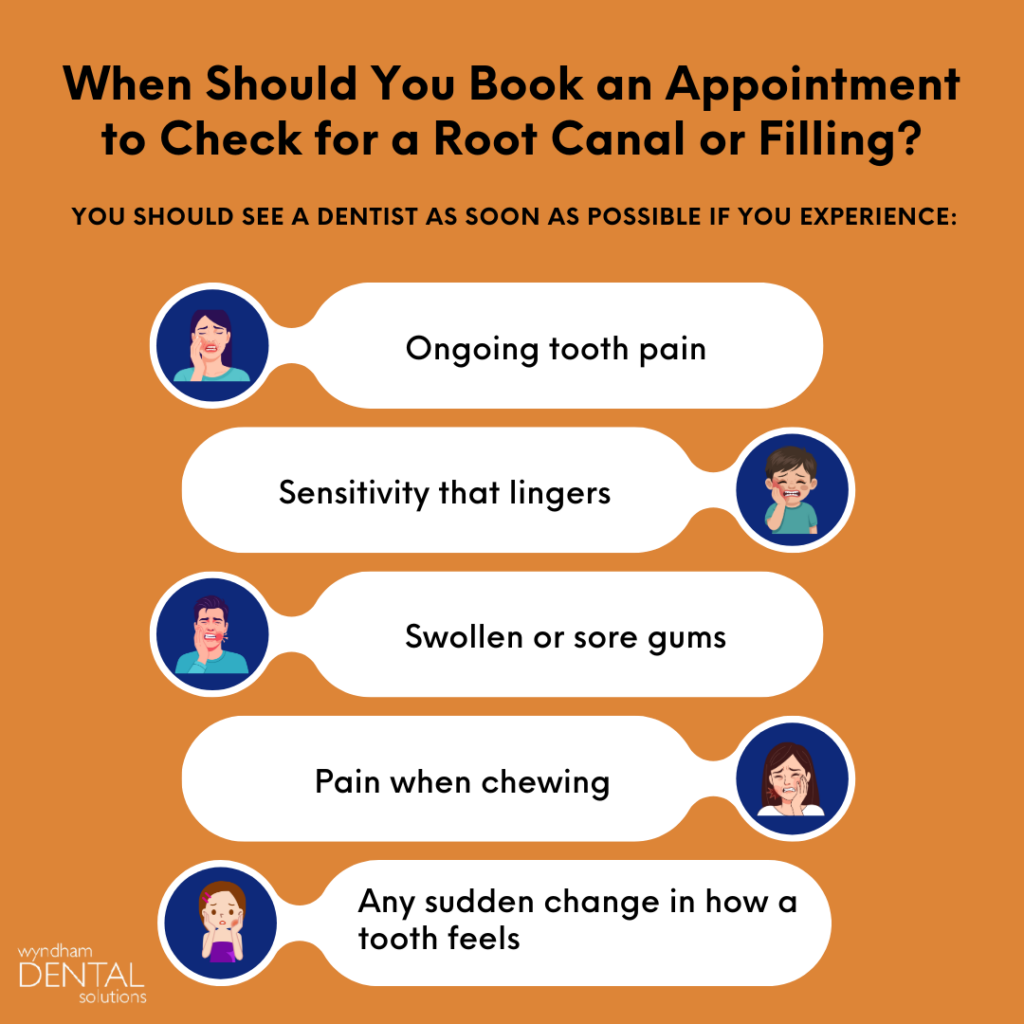
Even if the pain fades, the underlying issue may still be there.
If you’re unsure whether you need a filling or a root canal, the best next step is a professional assessment. At Wyndham Dental, our experienced team takes the time to diagnose the issue accurately, explain your options clearly, and recommend treatment that protects your smile in the long run. Whether it’s a simple filling or more advanced care, your comfort and oral health always come first.
Book an appointment today and get clarity before a small issue turns into a bigger one.